
Welcome to Champions of the Future America:
Here's Everything You Need to Know
Whether you’re a parent researching karting opportunities for your child, a seasoned competitor looking for your next challenge, or simply someone curious about what competitive karting looks like at a high level, welcome. The Champions of the Future America Series (COTF America) is one of the most exciting karting series to hit the American scene, and this guide will walk you through everything from who can race, what the race format looks like, and how points are earned towards the championship.
What Is Champions of the Future America?
Champions of the Future America is a professional karting series organized by K1 (of K1 Speed, K1 Circuit, and K1 RaceGear fame) in partnership with RGMMC, the same prestigious group behind the prestigious Champions of the Future series in Europe.
Since 2020, the European series has seen top racing talent compete, including current Formula 1 stars Arvid Lindblad (one of the karting series’ first champions) and Kimi Antonelli.
The American series brings that same high standard of competition to US soil, running 9 rounds of competition throughout 2026. The series is headquartered in Winchester, California with most events taking place at K1 Circuit during its inaugural season. In future seasons, plenty more venues will be added.
This isn’t just a local club race. COTF America uses CIK-FIA homologated equipment (the international standard in karting), meaning drivers are racing under the same technical framework used at the highest levels of the sport worldwide.
Who Can Race?
One of the most welcoming aspects of COTF America is how many different drivers it caters to. There are six classes across a wide age range, from young children to seasoned adult veterans.
Junior Classes
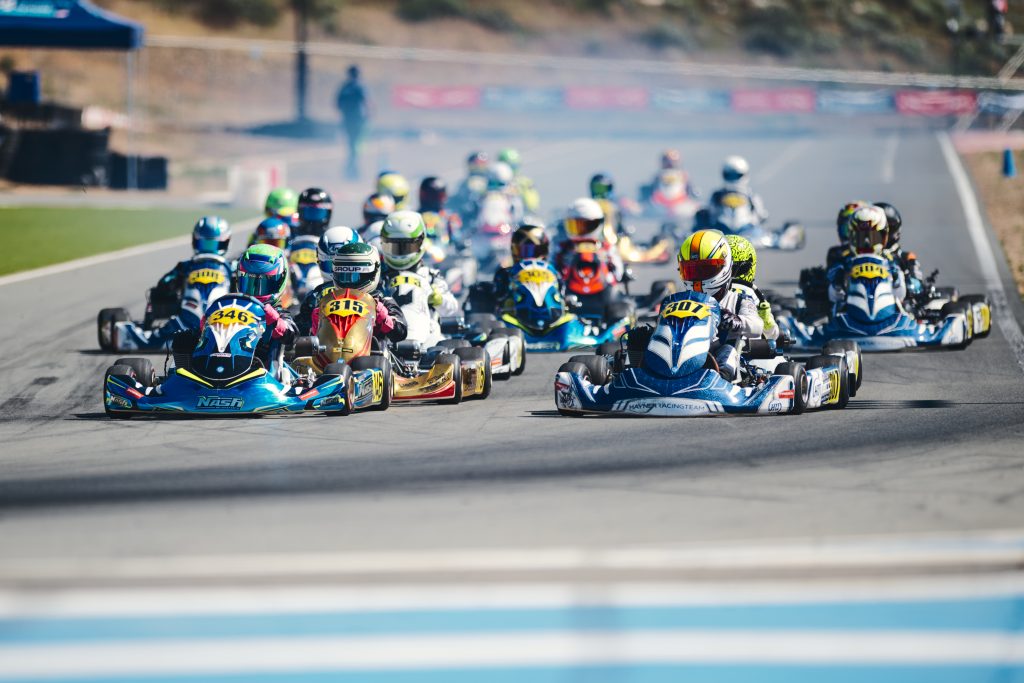
There are three different classes of junior competition for racers 14 years or younger.
The Mini U10 class is open for racers who are 7 to 10 years old. These classes use karts powered by 60cc 2-stroke engines, which can produce roughly 10 horsepower and top speeds of around 50 to 60 miles per hour.
The Mini class is open to racers from 9 to 13 years old. These classes use the same karts as U10.
The Mini U10 drivers race within the regular Mini class sessions and appear on the same grid, but they receive their own dedicated classification.
The KA100 Junior class is open to racers from 12 to 14 years old. These karts, using 100cc 2-stroke engines, produce around 22 horsepower and can reach speeds of around 75 to 80 miles per hour.
Senior Classes
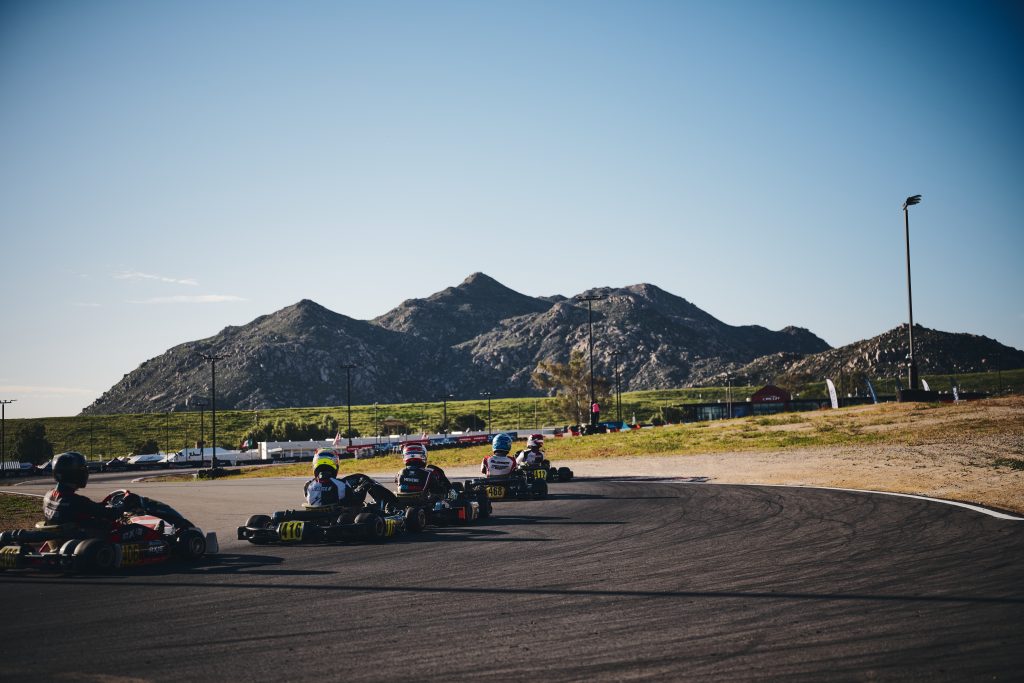
There are two different classes of senior competition for racers who are 14 and older. Both the KA100 Senior and X30 Pro classes require a minimum age of 14.
KA100 Senior karts, like the KA100 Junior class, use 100cc 2-stroke engines, which produce around 22 horsepower and can reach speeds of around 75 to 80 miles per hour.
X30 Pro karts, meanwhile, use 125cc 2-stroke engines that can produce around 28-30 horsepower and are capable of going between 75 and 95 miles per hour.
Heritage Classes
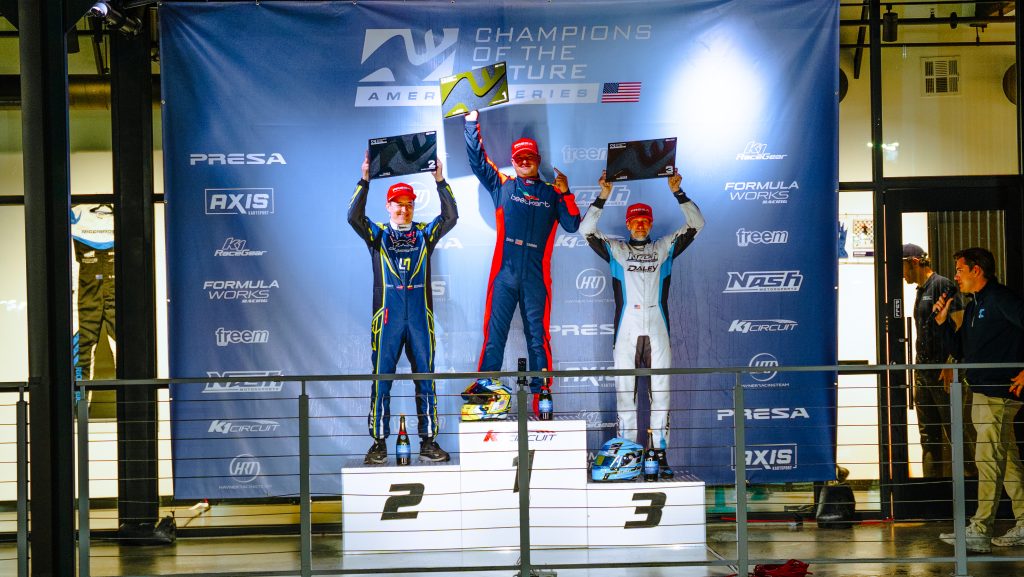
For more experienced adult drivers, the KA100 Heritage class offers a dedicated, competitive environment.
The Heritage class operates the same KA100 karts as Junior and Senior, with 100cc 2-stroke engines that produce 22 horsepower and speeds of around 75 to 80 miles per hour.
The 2026 Race Calendar
The series runs as a 9-round series from January through September. Most events are held at K1 Circuit in Winchester, California, on several different track configurations. These configurations even include a reverse track layout, which has never been run before in the circuit’s history! There’s also a special away round event in Nevada. This race at Spring Mountain Karting Complex in Pahrump will award DOUBLE points across all categories, making it the most valuable round of the season and a must-attend event for championship contenders.
Round 1: January 31 – February 1, K1 Circuit Pro Track Layout
Round 2: February 28 – March 1, K1 Circuit Pro Track with Chicanes and D’s Layout
Round 3: March 21 – 22, K1 Circuit REVERSE Pro Track with Tic-Tac-Toe and D’s Layout
Round 4: April 18 – 19, K1 Circuit Pro Track with Hairpin Layout
Round 5: May 29-31, Spring Mountain Karting Complex Full Track Layout
Round 6: June 27-28, K1 Circuit REVERSE Pro Track with Chicanes, D’s and Tic-Tac-Toe Layout.
Round 7: July 18-19, K1 Circuit Pro Track with Chicanes and Tic-Tac-Toe Layout
Round 8: August 29-30, K1 Circuit REVERSE Pro Track with Tic-Tac-Toe and D’s Layout
Round 9: September 26-27, K1 Circuit Pro Track Layout
How a Race Weekend Works
Here’s a breakdown of how the action unfolds during a COTF race weekend.
1. Free Practice
Every driver is encouraged to complete at least one optional free practice session on the Friday before every race weekend. This is where you learn the circuit, dial in your setup, and get comfortable. Sessions typically last 10 minutes.
2. Time Qualifying
Each class gets one 6-minute qualifying session of up to 36 drivers per group. Your best lap time determines your starting position for the Qualifying Heats. Every lap counts!
3. Qualifying Heats
After qualifying, drivers compete in at least two Qualifying Heats. These aren’t just warm-up races – points are on the line! Points are awarded in every heat and your accumulated total determines your grid position for the Super Heats.
4. Super Heats
The Super Heats serve as a decisive knockout round. Depending on entry numbers, one or two Super Heats are held, with grids set by the Qualifying Heat standings. Super Heat points are added to your Heat totals to form the Final Intermediate Classification. This determines who makes it to the Final and from where they start. Only the top 36 drivers from the Final Intermediate Classification will proceed to the Final.
5. The Final
The main event! Up to 36 drivers take the grid for the Final, with starting positions determined by the Final Intermediate Classification. This is where the glory (and the biggest championship points) are on the line.
How the Points System Works
COTF America uses a multi-layered points system that rewards consistency across the entire weekend, not just the Final.
Within Each Race Weekend (Heat Points)
Points are awarded at every stage: Qualifying Heats, Super Heats, and the Final. So even if your Final doesn’t go to plan, strong heat performances can still earn you crucial championship points.
Championship Points Per Round
At the end of each round, championship points are awarded to the top 15 finishers at each stage:
Qualifying Heats & Super Heats
Qualifying Heat and Super Heat winners get 25 points, second-place receives 22 points, third-place earns 19 points, then 17, 15, 13, 11, 9, 7, 6, 5, 4, 3, 2, and 1 for the remaining positions.
The Final
Winners of the Final get 50 points, second-place receives 44 points, third-place earns 38 points, then 34, 30, 26, 22, 18, 14, 10, 8, 6, 4, 2, and 1 for the remaining positions.
Drop Rounds
With 9 competitions in the season, the worst result is dropped for drivers who compete in all 9 rounds, keeping the championship alive for those who face a bad day. Note: a result from disqualification cannot be dropped.
Tiebreakers
If two drivers end the season level on points, the tiebreaker goes to whoever has the most Final wins, then second places, and so on. If still tied after all that, the better result in the Final of the last round of the season decides it.
Tires & Fuel
COTF America uses PRESA Tires by Maxxis as the exclusive supplier for both dry and wet conditions.
Each driver receives two sets of slick tires for each weekend (qualifying, heats, and final). Tires are distributed by random draw to keep things fair.
The official fuel supplier is Sunoco Race Fuel.
Entry & Costs
- Registration Fee: $325 per round
- Driver Package: $543 per round (includes two sets of tires for the weekend and transponder rental)
- Entries Open: Typically by the Friday following each event
- Maximum per Class: Unlimited
Ready to Get Involved?
Whether you’re strapping yourself in or cheering from the sidelines, Champions of the Future America offers a fantastic level of competition in a well-organized, welcoming environment. The combination of CIK-FIA standards, a full championship season, and categories for ages 7 and up make it one of the most complete karting series available in the United States. We’ll see you on the grid!